Science fiction, Fantasy and all things Imaginary - Free book downloads - Great shops to browse at the Internet Shopping Mall
Real Science

The real science behind the themes and subjects of my book, is what inspired the plots and characters that appear in its pages.
When I decided to write, I had to ask a question that many writers ask. Within which genre do I wish to write? I love science fiction movies and comics and the whole "What if" aspect of it, so it was essentially already decided before I began. Don't get me wrong...I also like good historical drama, thrillers and some horror. I find fantasy marvelously entertaining, but nothing grips me more than science fiction.
It didn't take me long to realize that all science starts off as theory and later is proven or dis-proven. I thought about science beyond earth and noticed that most of it still lives in the theoretical realm. This gave me an almost blank slate against which I could project my imagination.
Writing this book has been arguably one of the most difficult tasks I have ever taken on. I am not a very disciplined writer, but once I get going, I forget the time. The process of creating this saga has been a fascinating journey. Most of the ideas come sporadically and I tend to think best when brainstorming with friends.
Generally its a bit like only being able to see as far as a flashlight beam in a dark tunnel. You know that if you keep walking, you will eventually get to the end of the tunnel, but you don't know which direction the tunnel is going to take you. That's the hard part, the not knowing. You have to trust your instincts.
I was fortunate though, I had a lot of help. Real science was like a guiding light for me. It kept me within the realms of possibility, plausibility and speculation.
To explore some of the real science ideas I have speculated on, please click on the images below for links to Wikipedia:
Habitable Planets
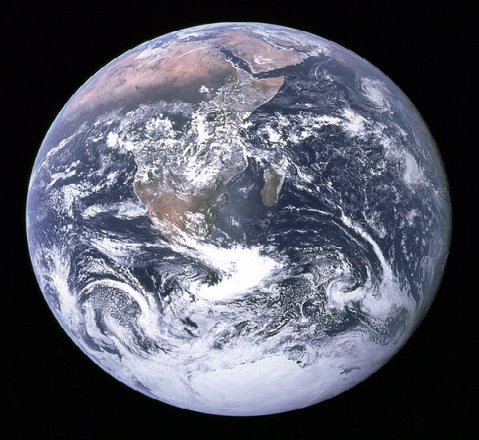
Planetary habitability is the measure of a planet's or a natural satellite's potential to sustain life. Life may develop directly on a planet or satellite or be transferred to it from another body, a theoretical process known as panspermia.
New planets are discovered all the time now. Speculation on their habitability is continuous. Even Mars has had centuries of speculation on whether it has been or is still populated by some form of life.
In my book I have speculated on the idea that many planets are populated with intelligent life...maybe even human life or derivatives thereof. Who knows?
I have taken this thought and populated numerous planets in my imagination; creating worlds of fantasy and fiction based on the discovery of one multiversal character who has traveled beyond the realms of known experience.
Extra terrestrial
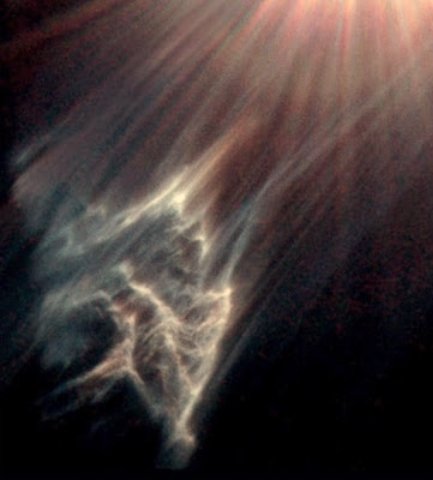
Extraterrestrial life is defined as life that does not originate from Earth. It is unknown whether any such life exists, and all discussion of it must be regarded as highly speculative.
So, what form of life could that be? We all know the usual ideas...bacteria, viruses, and so on. Could it be as simple as the stuff we are fed in the movies or perhaps something more elemental? Something that has no form or shape, just raw intelligent energy...other dimensional, but alive nonetheless. Is life only at the level of "the fittest survive"; that live only on the transfer of energy from one form to another?
Of course, we'll never know, but in the realms of science fiction and fantasy anything can happen...
Where fiction meets real science
Interstellar travel
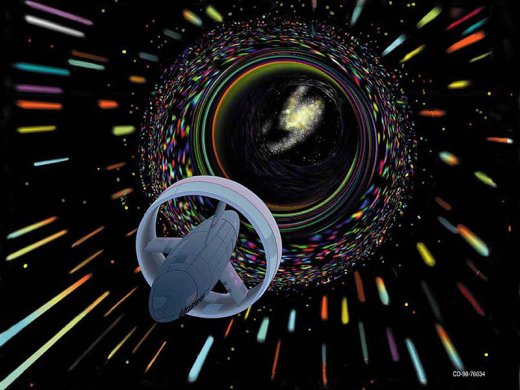
Interstellar space travel is unmanned or manned travel between stars. The concept of interstellar travel in star ships is a staple in science fiction. Interstellar travel is tremendously more difficult than interplanetary travel. Intergalactic travel, the travel between different galaxies, is even more difficult.
Oh yeah...Science fiction staple for sure. We are still a long way off, but great breakthroughs are happening all the time. Just maybe I'll see man on Mars in my lifetime. As a writer of sci-fi we can do all that stuff already. We can do all the Star Trek travels and adventures our hearts desire.
What's to stop us?...Only our imagination.
Wormholes
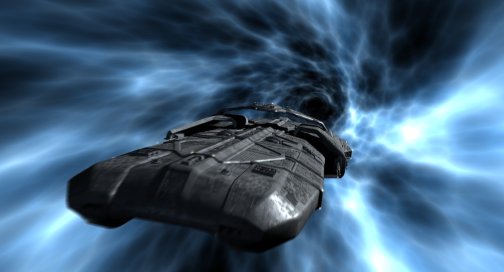
In physics and fiction, a wormhole is a hypothetical topological feature of space-time that would be, fundamentally, a "shortcut" through space-time.
In my book I call these vortexes. If you don't come from earth, you'll probably have a different mane for a worm. I have created two different types of vortexes: natural and man made. Natural meaning unstable and spontaneous events that appear and have a limited life. These would take you to any random place. Man made would be stable fee paying star gates for regular traffic to other parts of the Universe or Multiverse.
The coolest thing about sci-fi is that anything goes. All you have to do is make it sound plausible.
Time travel
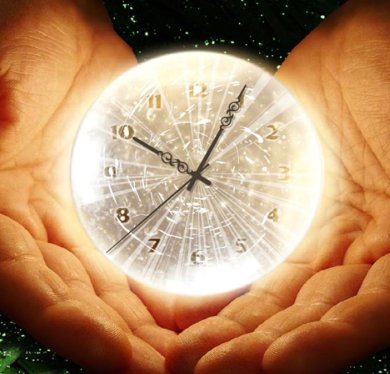
Time travel is the concept of moving between different points in time in a manner analogous to moving between different points in space, either sending objects (or in some cases just information) backwards in time to some moment before the present, or sending objects forward from the present to the future without the need to experience the intervening period (at least not at the normal rate).
How does one define time travel if you're from a different planet or Universe. In many earthly cultures time does not move in a straight line...Its more of a conceptual viewpoint. In space, I would think, time is only relative to the place you come from.
More real science behind the story
Universe
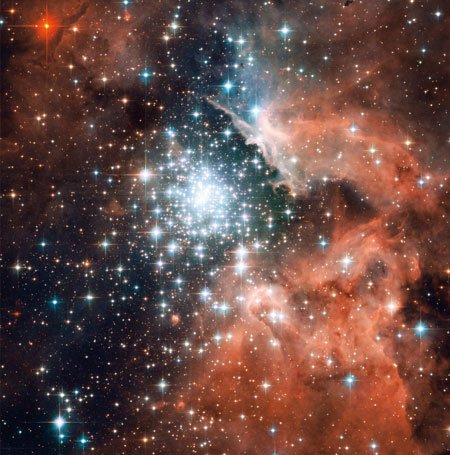
The Universe comprises everything perceived to exist physically, the entirety of space and time, and all forms of matter and energy. The term Universe may be used in slightly different contextual senses, denoting such concepts as the cosmos, the world, or nature.
All we as mere humans know and understand is that we live on earth in the milky way galaxy in the Universe. It started with the big bang and that it is expanding outwards. As our brains and outlook expands we may very well find out that the theory is all wrong...
...at least we have science fiction to question these things.
Multiverse
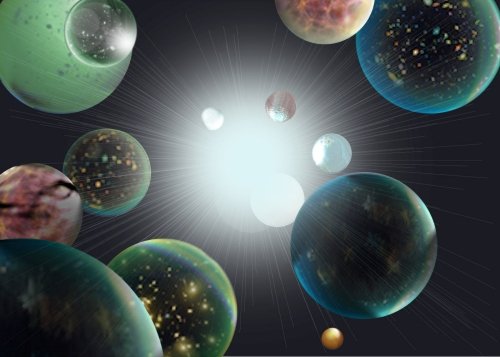
The multiverse (or meta-universe, metaverse) is the hypothetical set of multiple possible universes (including our universe) that together comprise everything that physically exists: the entirety of space and time, all forms of matter, energy and momentum, and the physical laws and constants that govern them.
Physicists are now speculating of the possibility of a multiverse. I have speculated in my book that it does exist and for want of a better number, decided there are ninety nine Universes in it with rumors of a hundredth. I've gone further to coin the phrase of the " Megaverse", which of course the multiverse exists in...
...only in the imagination.
Outer Space
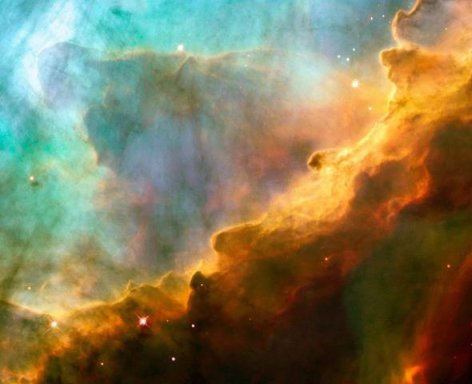
Outer space (often simply called space) is the void that exists beyond any celestial body including the Earth. It is not completely empty (i.e. a perfect vacuum), but contains a low density of particles, predominantly hydrogen plasma, as well as electromagnetic radiation, magnetic fields, and neutrinos. Theoretically, it also contains dark matter and dark energy.
Could it be that we discover another Universe out there in what I term...
The Megaverse!
Spaceships
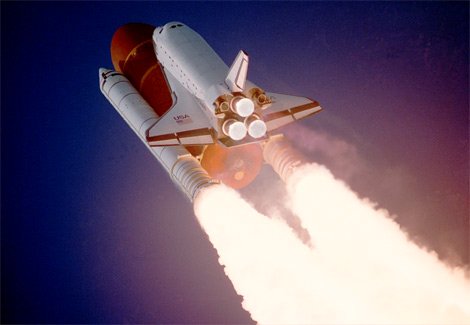
A spacecraft is a craft or machine designed for spaceflight. Spacecraft are used for a variety of purposes, including communications, earth observation, meteorology, navigation, planetary exploration and space tourism.
Here there has been all sorts of speculation. I think that over time, spacecraft are going to be developed that will take us beyond the beyond...just imagine the adventures that still await.
Space station
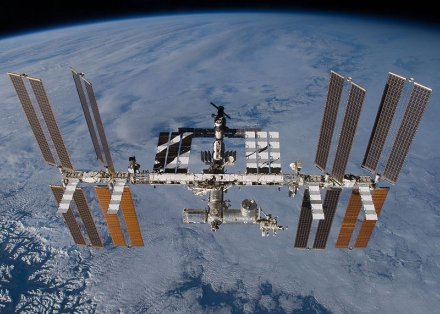
A space station is an artificial structure designed for humans to live and work in outer space for a period of time.
Imagine great big self sustained space stations out in outer space as way-stations for spacecraft to re-supply.
The real science behind the story
Moon base
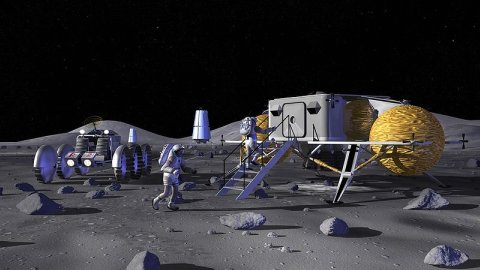
The colonization of the Moon is the proposed establishment of permanent human communities on the Moon. Advocates of space exploration have seen settlement of the Moon as a logical step in the expansion of humanity beyond the Earth.
I wonder why this has not yet happened...
maybe it has and we just don't know.
Suspended animation

Suspended animation is the slowing of life processes by external means without termination. Breathing, heartbeat, and other involuntary functions may still occur, but they can only be detected by artificial means. Extreme cold can be used to precipitate the slowing of an individual's functions; use of this process has led to the developing science of cryonics.
This is what happens to the main character in my book...I've tried to consider this happening naturally to a hybrid individual and what genetic traits would enable him to survive for 800 years in a state of Suspended Animation
Speculating on real science
Para-human

A para human or para-human is a term used to describe a human-animal hybrid. Scientists have done extensive research into the combination of genes from different species, e.g. adding human (and other animal) genes to bacteria and farm animals to mass-produce insulin and spider silk proteins. Note that individual genes can be transplanted between species without the transplantation of whole cells.
Imagine the possibilities. When I considered the premise for my book, I thought "What if these sciences were perfected to create beings designed for purpose...what if in some alternative Universe; this was the norm..."
Imagine the Possibilities!
Genetic engineering
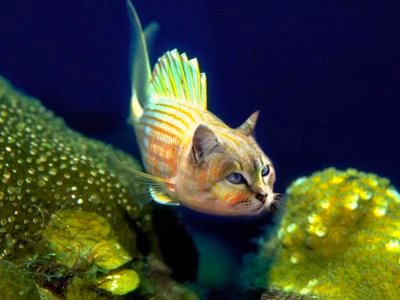
Genetic engineering, recombinant DNA technology, genetic modification/manipulation (GM), and gene splicing are terms that apply to the direct manipulation of an organism's genes.[1] Genetic engineering is different from traditional breeding, where the organism's genes are manipulated indirectly. Genetic engineering uses the techniques of molecular cloning and transformation to alter the structure and characteristics of genes directly.
I imagine this applies mostly to crops and food, but there is likely to be a lot of weird stuff going on that we don't know about...
Human cloning
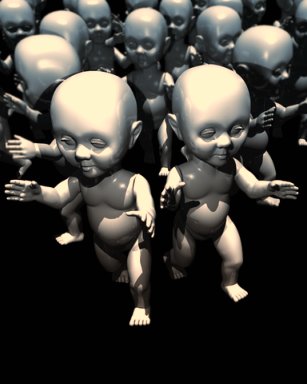
Human cloning is the creation of a genetically identical copy of a human (not usually referring to monozygotic multiple births), human cell, or human tissue. The ethics of cloning is an extremely controversial issue.
What if, in my world, this is the norm. Could they be created to perform as labor, armies...expendable. What about the humanity of these clones...once created; are they humans or not? Can they have children of their own...what happens then...?
Nano-robotics
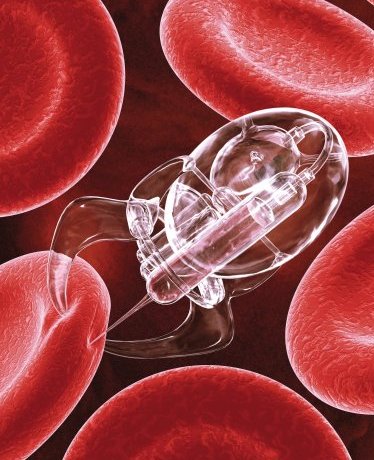
Nanorobotics is the technology of creating machines or robots at or close to the microscopic scale of a nanometer (10−9 meters). More specifically, nanorobotics refers to the still largely hypothetical nanotechnology engineering discipline of designing and building nanorobots, devices ranging in size from 0.1-10 micrometers and constructed of nanoscale or molecular components. As no artificial non-biological nanorobots have yet been created, they remain a hypothetical concept. The names nanobots, nanoids, nanites or nanomites have also been used to describe these hypothetical devices.
Great material for the imagination...the medical applications for this technology is mind boggling. On the flip side the destructive applications could be catastrophic.
Return to the top of real science.



Get your
book!
USA
UK
